
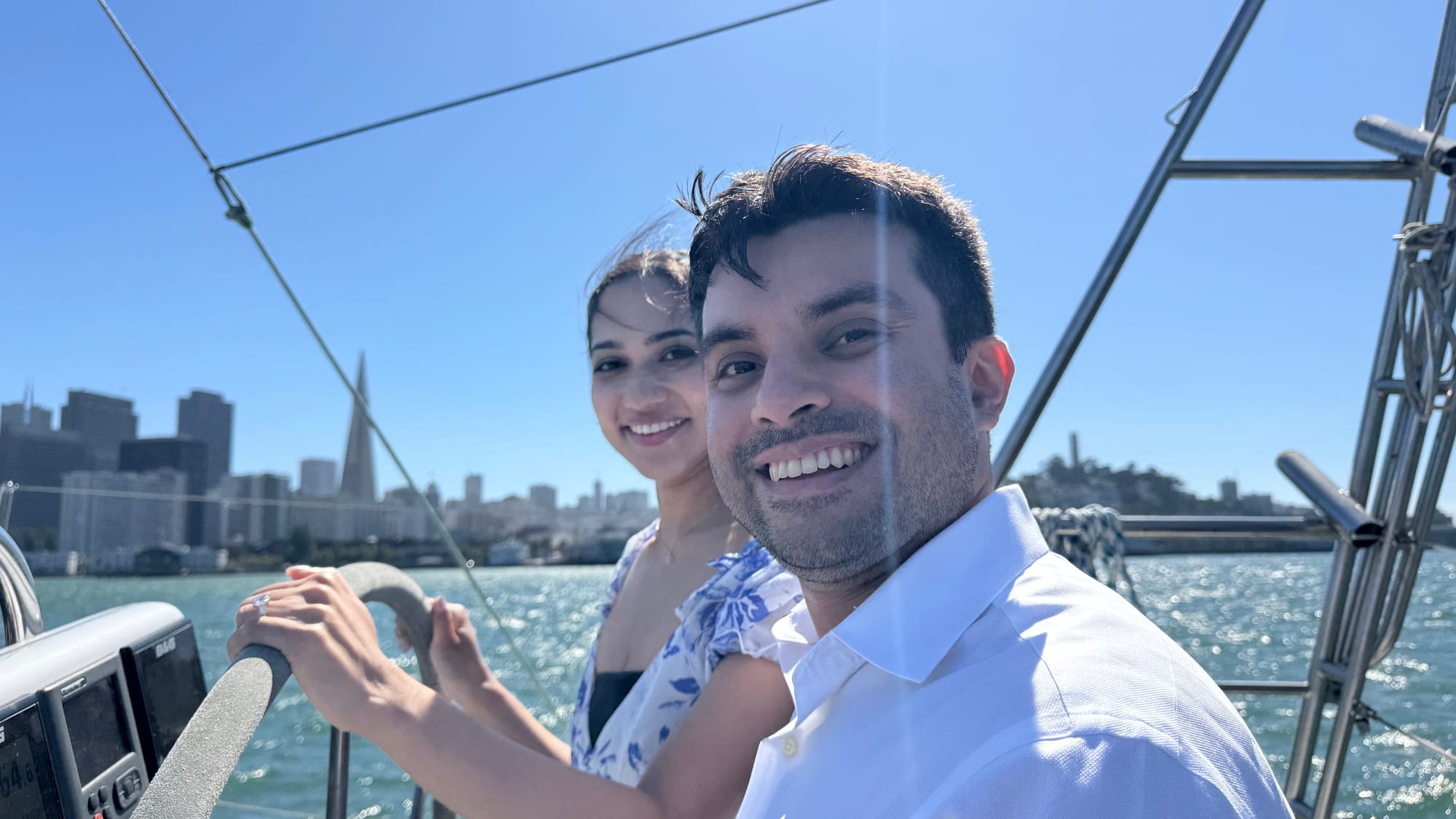
It is usually the first question, asked a little quietly, a week or so before the charter. Someone in the group got seasick on a whale watching trip years ago, or on a ferry in Greece, and they would rather not spend a birthday sail leaning over the side.
Here is the honest answer. Most people are completely fine on San Francisco Bay. A few feel a little off for a while. Very few are properly sick. And the people who worry most beforehand are, more often than not, the ones who come back to the dock wondering what they were worried about.
None of that is a promise, because nobody can promise how your inner ear will behave. What we can do is explain why the Bay is gentler than most people expect, and what genuinely helps.
What seasickness actually is
Seasickness is a disagreement between your senses. Your inner ear feels the boat moving. Your eyes, if they are fixed on something that moves with you, like a phone, a menu or the inside of a cabin, report that nothing is moving at all. Your brain gets two stories at once and does not like either of them.
That is why almost every piece of advice that works comes down to the same thing: let your eyes see the motion your body is feeling. Once they agree, the queasiness often eases.
Almost every remedy that works comes down to one thing: let your eyes see the motion your body is feeling.
Why the Bay is kinder than you think
Most bad seasickness stories come from the open ocean, where long swells roll a boat steadily for hours. The Bay is enclosed water. The long ocean swell is much reduced once you are inside the Golden Gate, so most of what you meet in the Bay is short, choppy wind waves, and on a calm morning barely those.
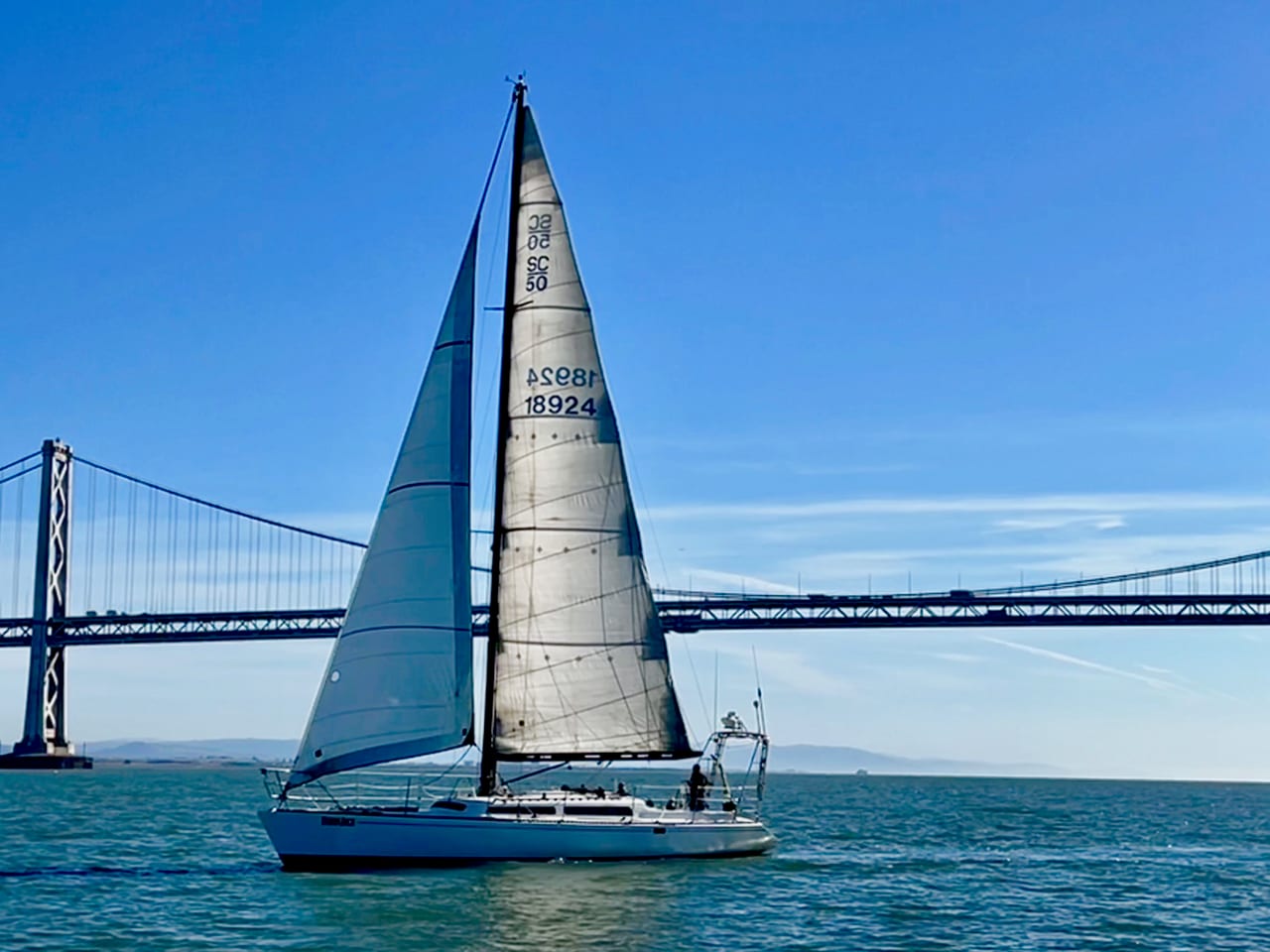
A sailboat helps too. Under sail, the wind presses steadily on the sails and holds the boat at a settled angle, which damps the side to side rolling that makes a motorboat so uncomfortable when it sits still. The boat leans, and that surprises people the first time, but a steady lean is much easier on the stomach than a roll.
Size matters as well. A bigger, heavier boat has a slower, gentler motion in the same water. If anyone in your group is anxious, a larger boat such as Yukon Jack or the Beneteau 37 is the gentler choice. Every boat is on the fleet page.
When the water is lumpiest
The Bay's mood follows the wind. In summer the afternoon westerly pours in through the Golden Gate and builds a steady chop, strongest near the Gate itself, while mornings and evenings are usually calmer. Our guide to the Bay's wind and weather explains the pattern month by month.
The current plays a part too. When a strong ebb runs out against the incoming wind, the water stands up into steeper, shorter waves, some of the bumpiest the Bay gets. How tides and currents work on the Bay covers why. If someone in your group is nervous, tell us when you book, so the captain knows before the day.
Before you come aboard
Most of the work happens the day before and the morning of. This list covers almost all of it.
- Sleep well the night before. Tiredness makes everything worse.
- Eat a light, plain meal an hour or two before. An empty stomach is worse than a light one; a heavy, greasy one is worse still.
- Go easy on the night before, and pace the beer and wine on board.
- Dress warmly. Being cold makes queasiness worse, and the Bay is colder than the city. Here is what to wear on the Bay, by season.
- If you know you get seasick, talk to a pharmacist or your doctor before the day. Most remedies work best taken in advance, not once you feel ill.
- Bring some ginger: sweets, biscuits or ginger ale. Plenty of sailors swear by it.
Where to sit
Stay up on deck, in the open air, where you can see the horizon. Near the middle of the boat moves least, and the front moves most, so if you feel unsure, settle into the cockpit rather than up at the bow. Face forward if you can.
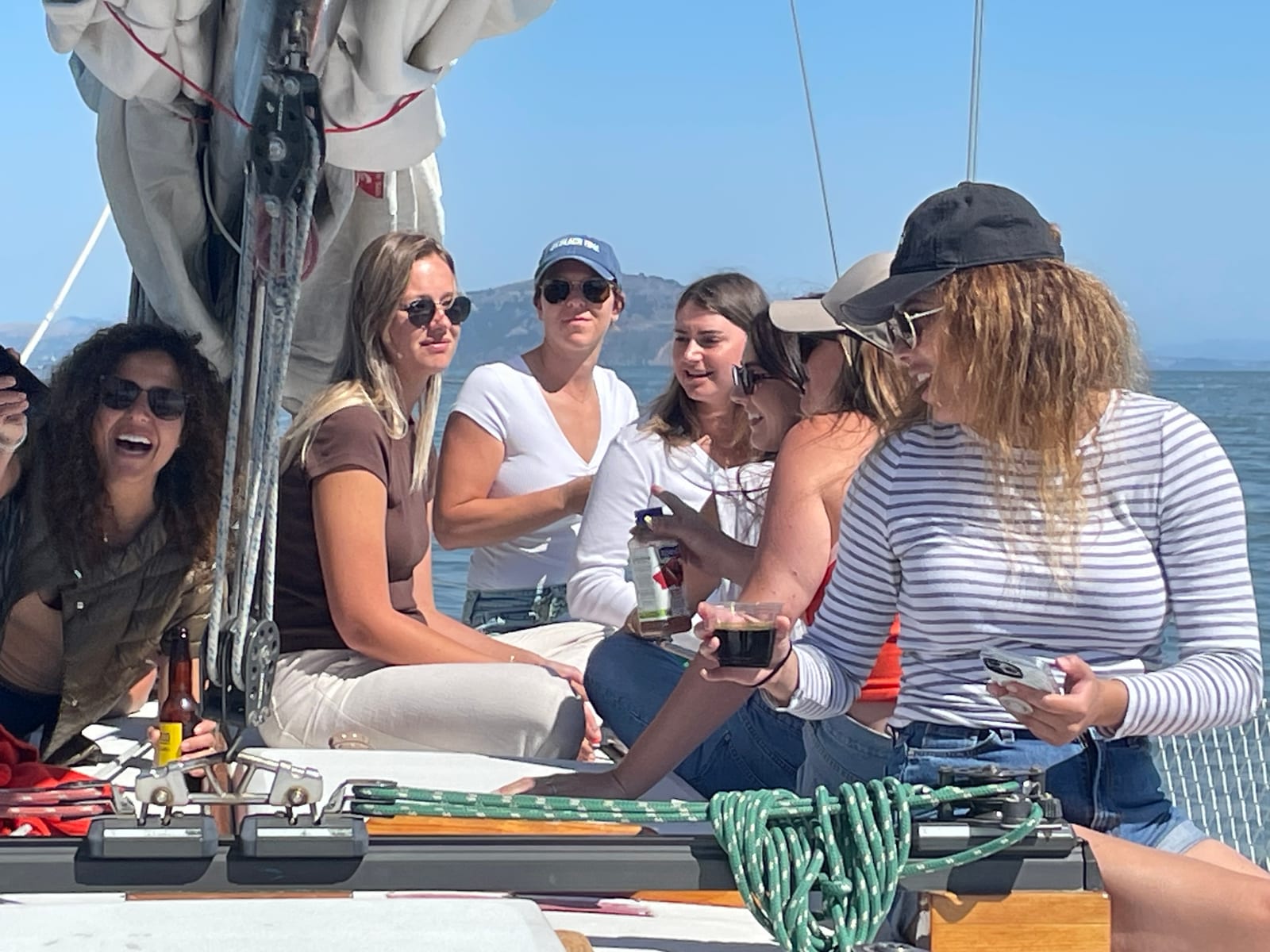
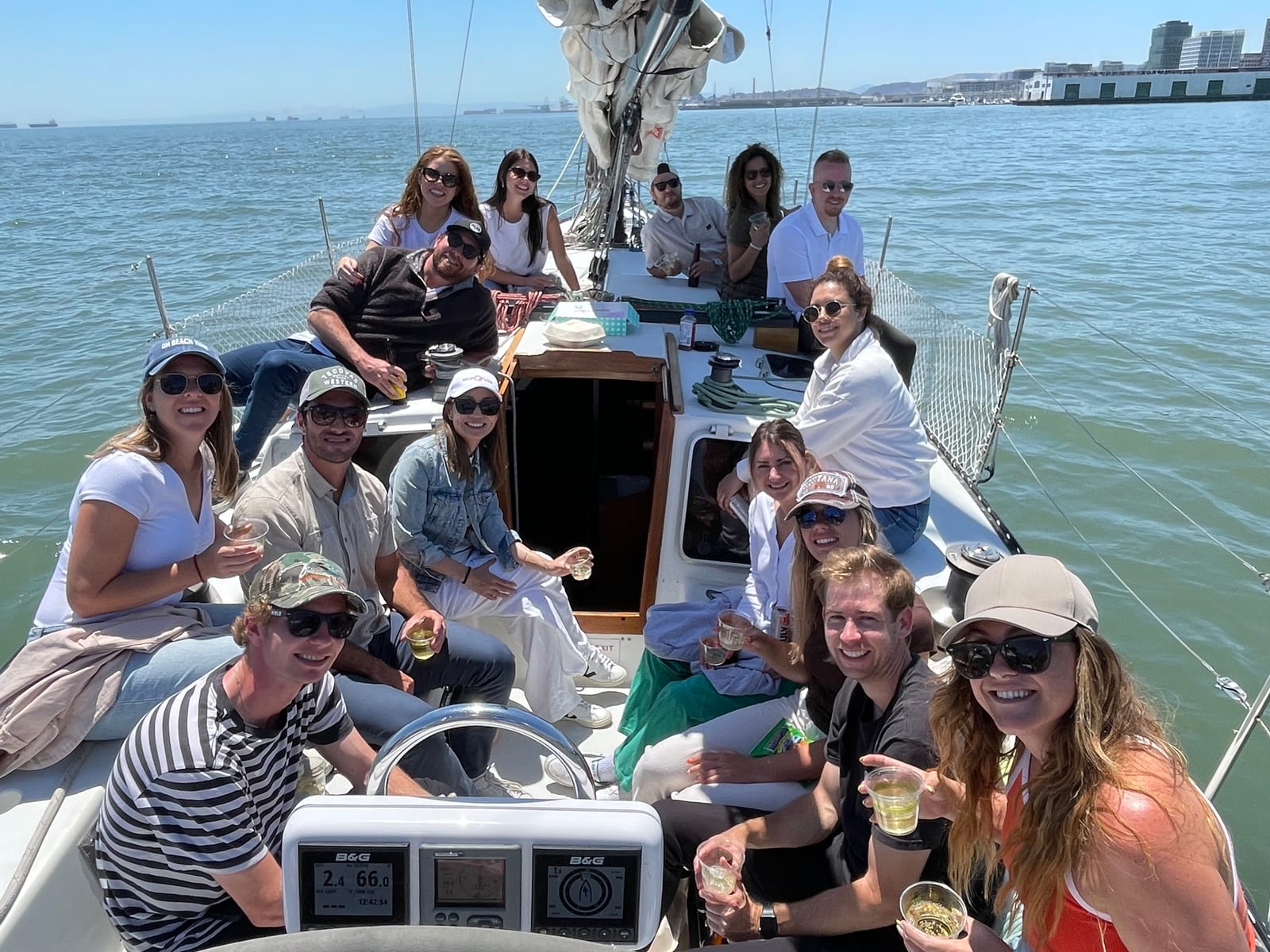
Stay out of the cabin. Popping below for a minute is fine, but sitting inside, with no horizon and walls that move with you, is the fastest way to feel ill. The same goes for your phone. Take your photos, then put it away and look at the city.
Take the helm
One of the best things you can do is steer. Whoever is at the wheel is watching the horizon and the water ahead and feeling the boat respond to every move they make, so their eyes and their inner ear agree completely. Sailors have long noticed that the person driving is usually the last one to feel unwell.
Every charter comes with a licensed captain, and if you would like a turn, ask. It is easier than it looks, and what it feels like to take the helm explains what you will be handed.
If you start to feel it anyway
Tell the crew early. It is not an inconvenience, and it is far easier to help in the first ten minutes than the last. Then:
- Look up and out Find the horizon, or a fixed point on land like the Bay Bridge, and keep your eyes on it.
- Get some air Move to where the breeze is on your face and away from the engine exhaust.
- Sip and nibble Small sips of water and a plain cracker or some ginger, nothing more.
- Let the captain help Tell the captain. Depending on the day, the crew may be able to ease the sails so the boat sits flatter, or choose a smoother course. It is your charter, and nobody minds being asked.
Plan your sail
If seasickness is on anyone's mind, mention it when you ask for a quote. We will suggest a boat and a time of day that suit, and pass it on to the captain. How to rent a boat for your event walks through the other decisions, and the catering page has lighter options if you are choosing food for the boat.
When you are ready, request a quote with your date and headcount, and have a look at how to find us at Pier 40. Most people step off at the end wondering why they ever worried.