
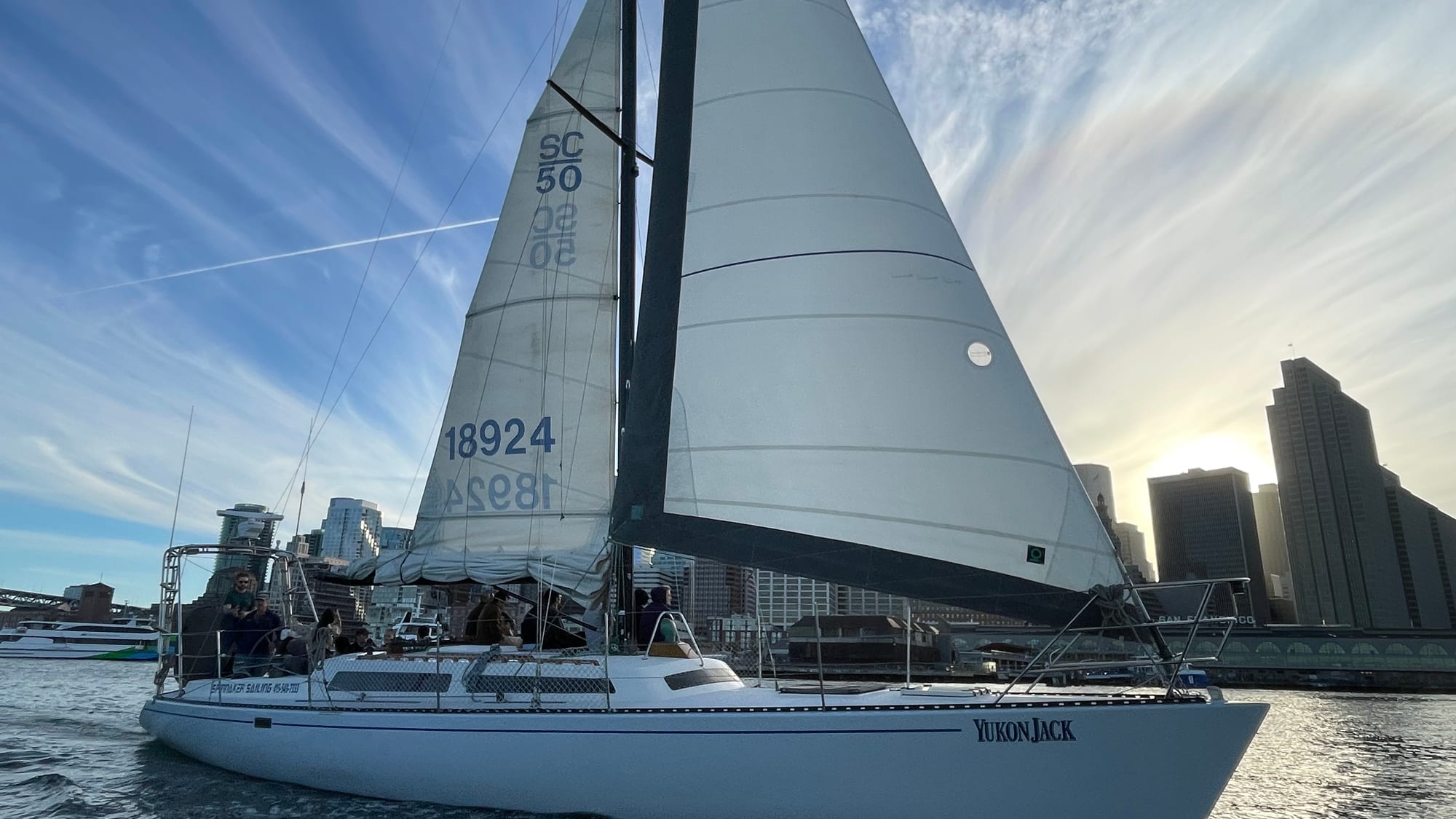
It happens a few minutes after the sails go up. The engine goes quiet, the breeze fills the sails, and the whole boat tips over to one side and stays there. Somebody grabs the nearest rail. Then everyone looks at the skipper, who is sitting there completely relaxed, steering with one hand.
That lean has a name, heeling, and it is the most normal thing a sailboat does. It is also what first-time guests ask about most: is she going to tip over? Here is why a sailboat leans, why she comes back up, and how to enjoy it rather than brace against it.
It is supposed to do that
A sailboat leaning in the wind is not a boat in trouble. It is a boat working. The lean is the visible sign that the sails have caught the breeze and are turning it into speed, and on a breezy Bay afternoon it is how the sailing is meant to feel.
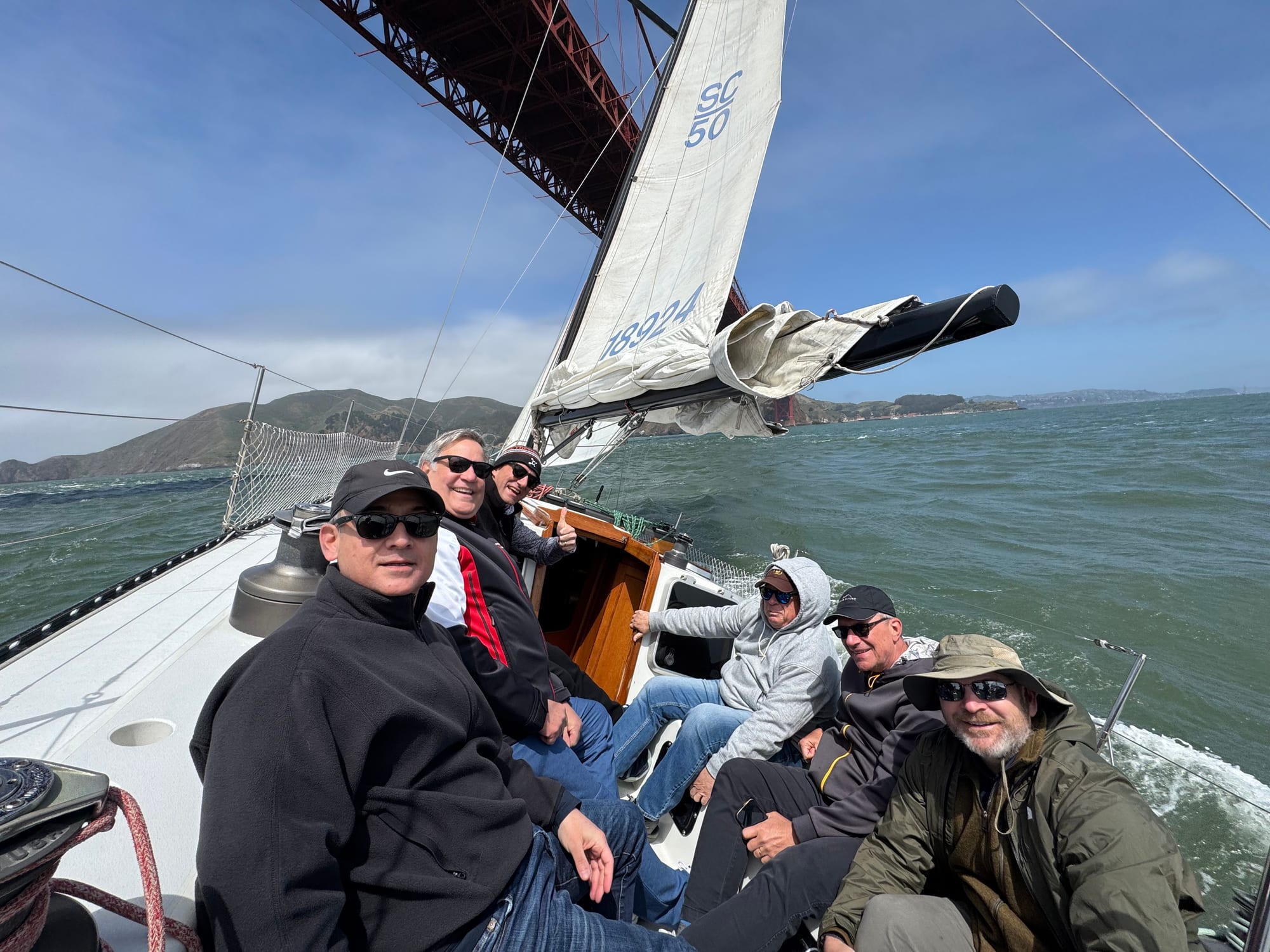
Most people settle in within a few minutes. After half an hour, they tend to notice the lean only when it stops, because the boat has turned downwind and suddenly everything feels oddly flat and still.
Why the wind pushes her over
A sail works a lot like a wing standing on its end. Wind flowing across it creates a force that pulls the boat forward, but some of that force also pushes sideways. The sideways part does two things. Underwater, the keel resists it, which is why the boat moves forward instead of sliding across the water like a leaf. Up top, it tips the mast over, and the whole boat leans with it.
More wind means more push, so the lean grows as the breeze builds. That is why the same boat that sits nearly upright on a still autumn morning will heel well over on a summer afternoon, when the westerly pours in through the Golden Gate. Our guide to the Bay's wind and weather explains when and why that breeze arrives.
Why she comes back up
Underneath every boat in our fleet is a keel: a deep fin with a great deal of weight at the bottom of it. When the wind tips the boat over, that weight swings out to the high side and pulls her back toward upright. The further she leans, the harder the keel pulls.
There is a second safety valve, too. As a boat heels further, her sails tilt away from the wind and catch less of it, so the force tipping her over eases off just as the force pulling her back grows. The boat finds a balance and settles there, which is why a heeling sailboat feels steady rather than wobbly. Our honest guide to seasickness explains why that settled angle is easier on the stomach than a roll.
- 48% of a J/80's weight is its keel
- 4,253 lbs of ballast under Valkyrie, our Beneteau 37
- 9 tons of boat in Yukon Jack, our Santa Cruz 50
The numbers explain the feel. The J/80 is a small, lively boat, and nearly half of her is lead. The Beneteau 37 carries over two tons of it. Yukon Jack is fifty feet and nine tons, and her size and weight give her a slower, steadier motion.
The further she leans, the harder the keel pulls her back.
How much lean is normal
On a breezy afternoon, a boat sailing upwind leans far enough that the low side runs close to the water. It looks steep from down there, and from the high side it looks like nothing much at all. The deck is still easy to sit on, drinks still stay in hands, and guests who were nervous at the dock often end up enjoying it.
The lean comes and goes with the course. Sailing upwind heels the boat most. Turning across the wind eases it, and running downwind brings her nearly upright. The Bay's currents shape the day as well: how tides and currents work on the Bay covers why a strong ebb against the wind makes the water lumpier.
Where to sit
The best seat on a heeling boat is up on the high side, the side lifted toward the sky. Sailors call it sitting on the rail: the best view, the most breeze, and dry feet.
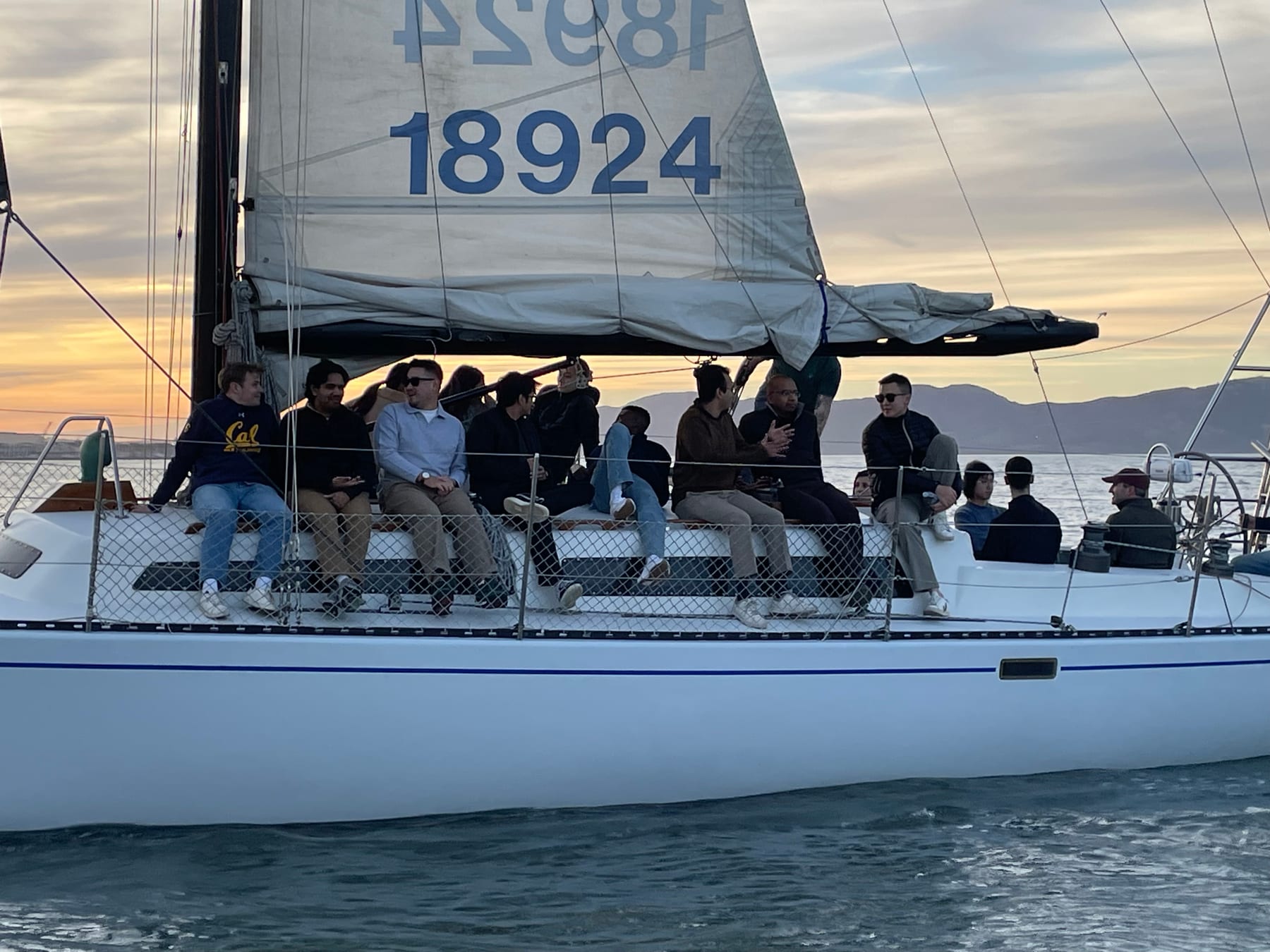
It is not just for the view. A row of people on the high side adds weight where the keel is already working, which helps the boat stand up a little straighter and sail a little faster. On a charter, you help just by sitting down.
The low side is where the water rushes past. Some people love it there. If you would rather not get splashed, stay up high, and wear soft, grippy shoes so your feet stay put. What to wear on the Bay has the rest.
What it feels like aboard
The first few minutes feel strange. Then the body works it out. You find a spot, brace a foot against something, and the lean becomes the background to the afternoon, along with the city sliding past and the sound of water along the hull.

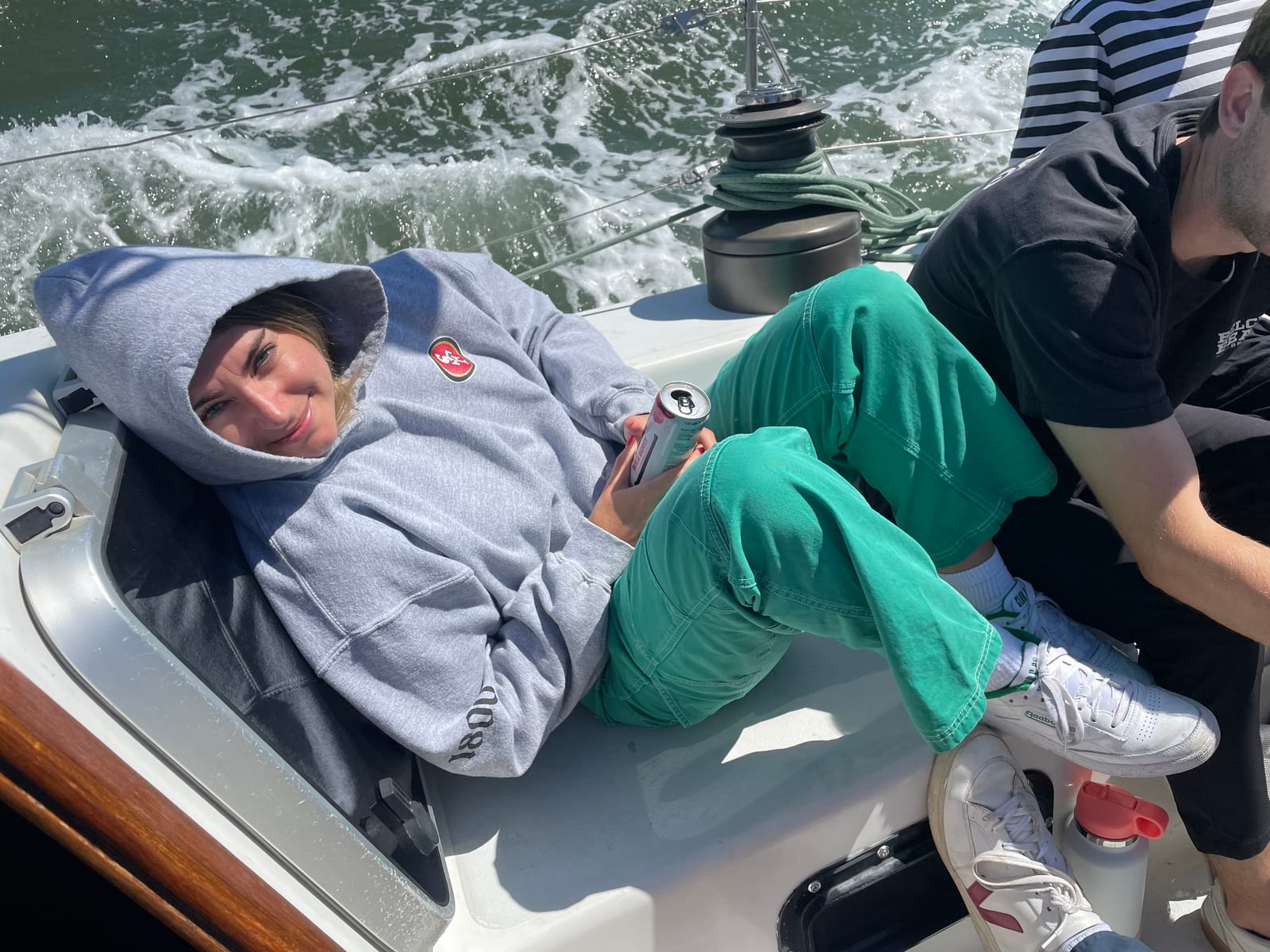
Moving around is easy once you know the trick: one hand for yourself, one for the boat. Hold on to something as you move, step to the high side rather than the low, and let the crew know before you head below.
If you would like a gentler ride
Tell the skipper. Every charter has a licensed skipper, and depending on conditions they can ease the sails, reef, or pick a course with less lean. Mornings on the Bay are usually calmer than afternoons, and a larger boat moves more slowly and gently, so both are worth mentioning when you book.
The opposite request is welcome too. If your group wants to feel the boat lean over and go, ask about an afternoon sail, when the breeze is usually stronger, and ask for a turn at the helm. Steering a boat that is heeled and moving fast is the best part of the day for a lot of guests, and what it feels like to take the helm explains what you will be handed. For groups that want it competitive, a team regatta puts every crew on the rail at once.
Plan your sail
Have a look at the boats across the fleet, or read about a sail under the Golden Gate on Yukon Jack, where the breeze is at its liveliest. When you are ready, request a quote with your date and headcount, and mention whether you are hoping for a gentle sail or a lively one.
The boat will lean. Give it a few minutes, and you will be leaning with it.